
The Meaning of Normality
The People UpstairsThis flow traces the shifting definition of what counts as ordinary for humans, Milotans, and the hybrid child.
increasing Bearing strength in each event
 decreasing
Bearing strength in each eventdecreasingOrdinary Alien
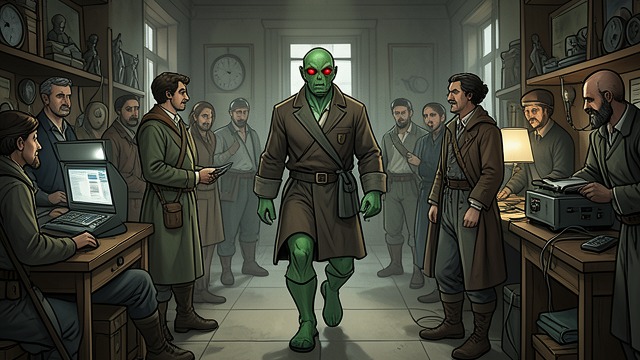
Ordinary Alien
Milotan Normality
Dan Greene's green skin and red pupils are ordinary on Milotis. His appearance was selected for its lack of distinction among his own people.
Human Strangeness
On Earth, the same features would be remarkable, yet his disguise makes him seem merely foreign. Normality depends entirely on the observer's frame.
The story begins by making alienness ordinary and humanity strange. This reversal prepares the reader to question every social judgment that follows.
Puny Human Child
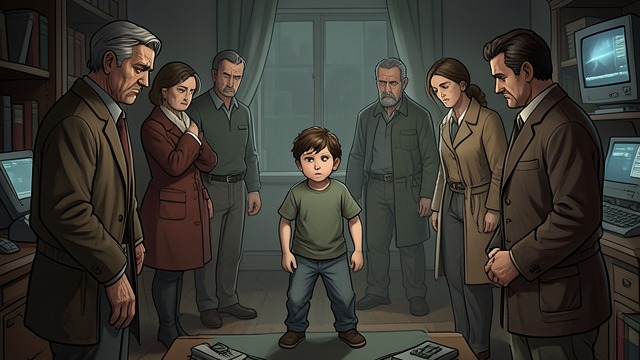
Puny Human Child
Neighboring Judgment
Residents call Terence puny and backward because his growth does not match terrestrial expectations. May knows the judgment is biologically mistaken but cannot challenge it.
Internalized Standards
After years on Earth, May begins to think of Terence as retarded herself. The surrounding culture has begun to alter the observer as well as the observed.
Normality becomes psychologically contagious. Even an informed alien mother can absorb the standards of the society that excludes her child.
The Human Freak
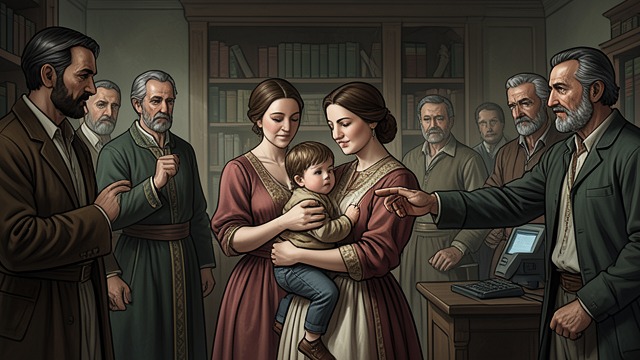
The Human Freak
New Classification
The principal regards Terence as a damaged human child rather than an alien. Her compassion depends on treating difference as pathology.
Partial Protection
This classification keeps the family safe from discovery but denies Terence ordinary acceptance. He is spared one kind of exclusion only by entering another.
The story refuses to equate concealment with liberation. A society may tolerate difference only after forcing it into a familiar category.
when Dan is first described at home
during Terence's toddler years
after the school principal inspects Terence
